About the Platform
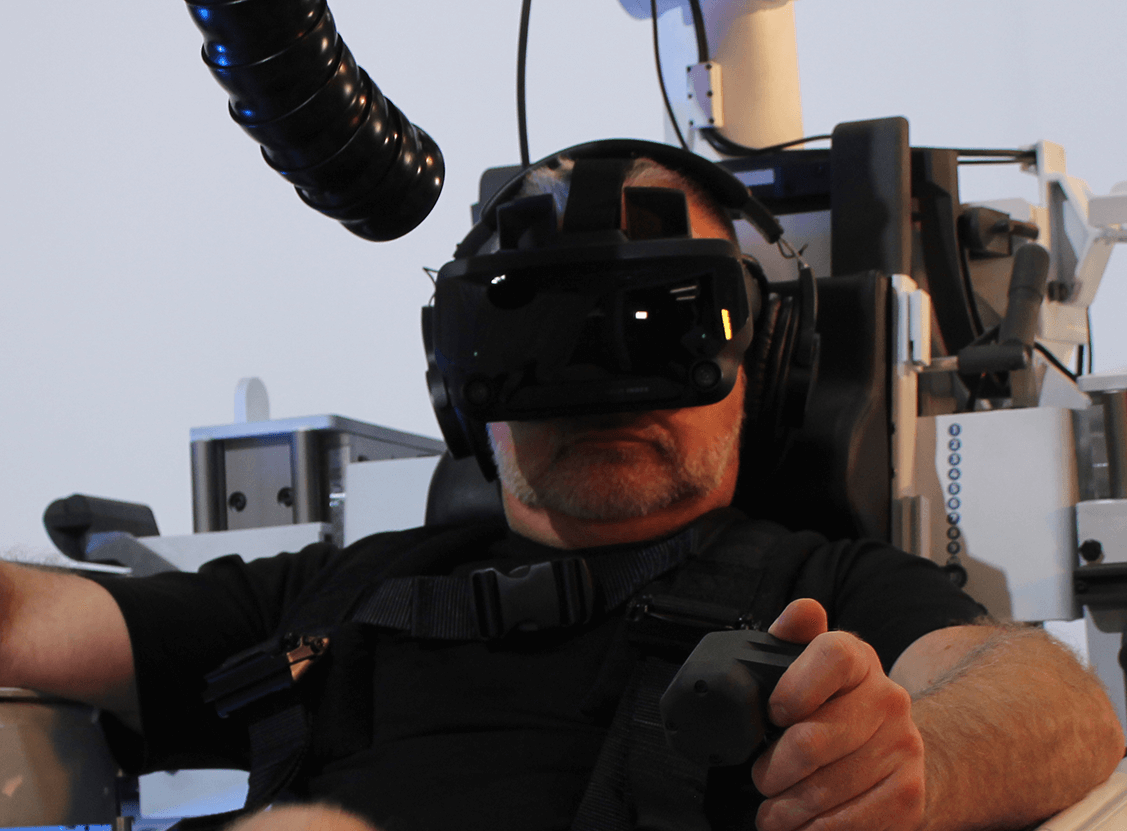
OutbounderARS combines robotics, virtual reality, and motion to make brain and body training active and engaging. The system adjusts to each client’s abilities and progress. Every session pairs physical movement with problem-solving and thinking skills. This approach helps the brain build new connections and supports gains in balance, movement, coordination, thinking, and confidence.
A Different Approach
The current approach to neurorehabilitation is one-on-one coaching from a therapist while performing some variation of modality specific repetition exercise. That is, they focus on just one muscle group or function, repeating a motion or action over and over. This method to neurorehabilitation has fewer than 10% of patients recover to an outcome that allows them to resume living an active, independent lifestyle. The Outbounder platform was designed to take a very different approach. A wealth of research over the last 30 years has strongly indicated that stroke recovery can be significantly improved through immersive stimulation and robotic assistance. The Outbounder platform simply leverages this research with an approach of uncompromising design and implementation.
The Platform
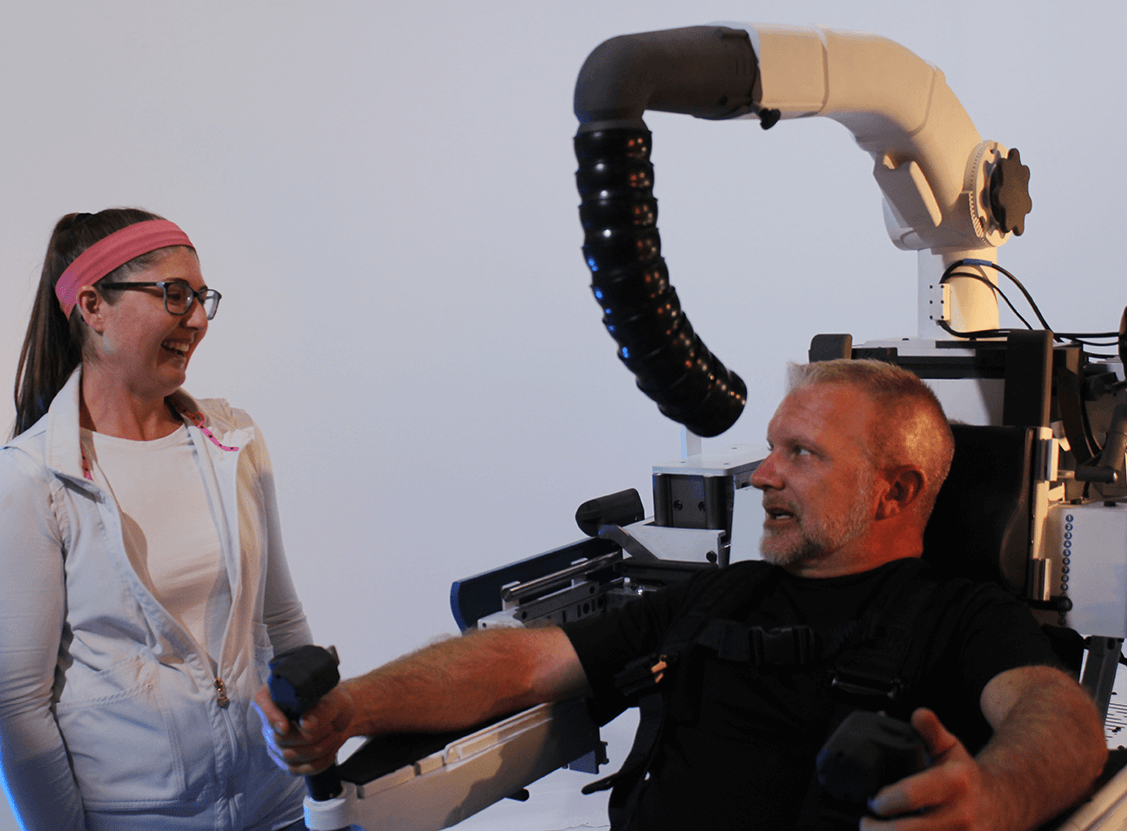
The treatment is designed to stimulate general neuroplasticity through a full body, multi-modal, experience-based therapy that works the entire body along with all the senses and cognitive functions simultaneously. This saturates the sensory, association and motor cortices with signals. Stimulating general neuroplastic improvement allows our treatment to not only profoundly advance neuromuscular performance but also improve balance, fine motor skills and even a reduction in spasticity. Moreover, it has shown to dramatically improve a host of cognitive issues including aphasia, left/right side deficit and reaction time among many other impairments. Our enhancement of general neuroplasticity also produces a radical upturn in the mental health of the stroke survivors and their caregivers.
Advanced Robotics
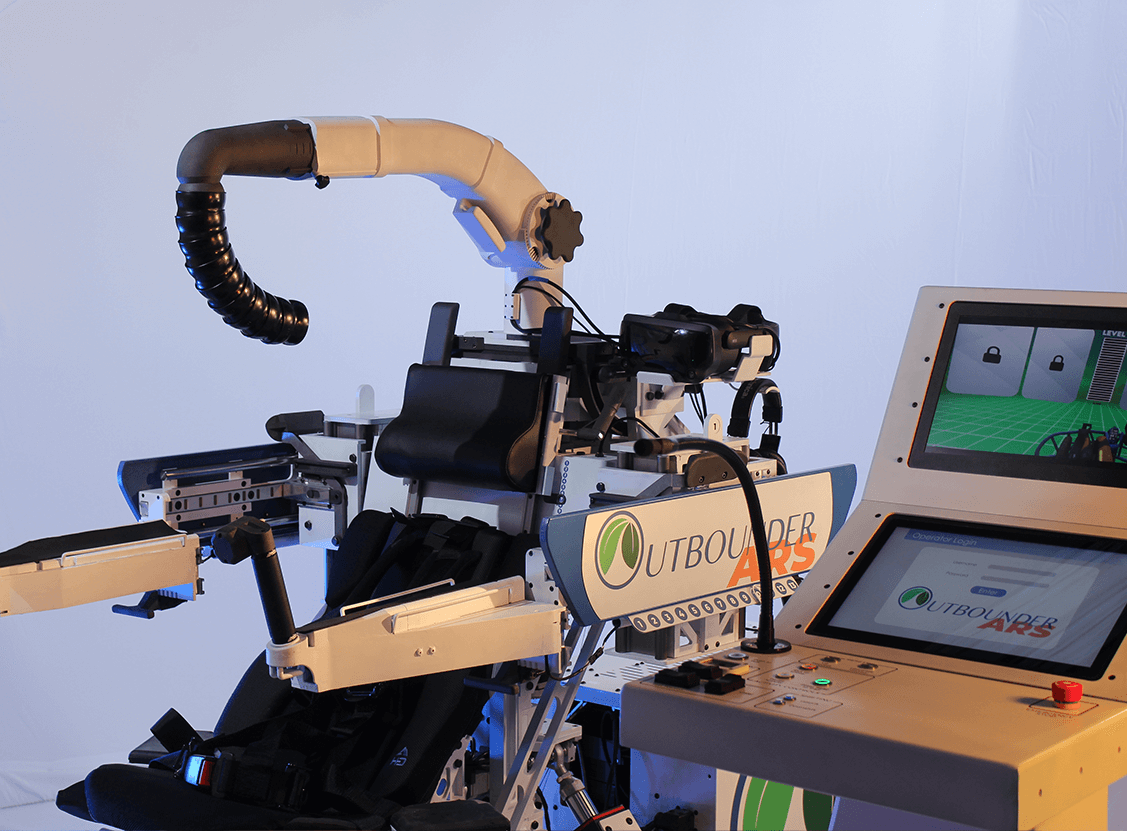
We compensate for neuromuscular weakness through advanced robotics. The suite of sensors, motors and other sub-systems are all computer controlled to balance out the impaired limbs' efforts with the unimpaired side. We call this asymmetrical compensation, and it results in an experience where the stroke survivor does not feel impaired while riding. This important function not only makes the therapy enjoyable for the rider but also plays a key role in heightening neuroplasticity. We belief the sensory feedback from the simulation of successful neuromuscular execution encourages higher signal density to the associated damaged neural pathways. The addition of robotics also gives the platform incredible ease of access for seriously impaired stroke survivors.
Deep Immersion
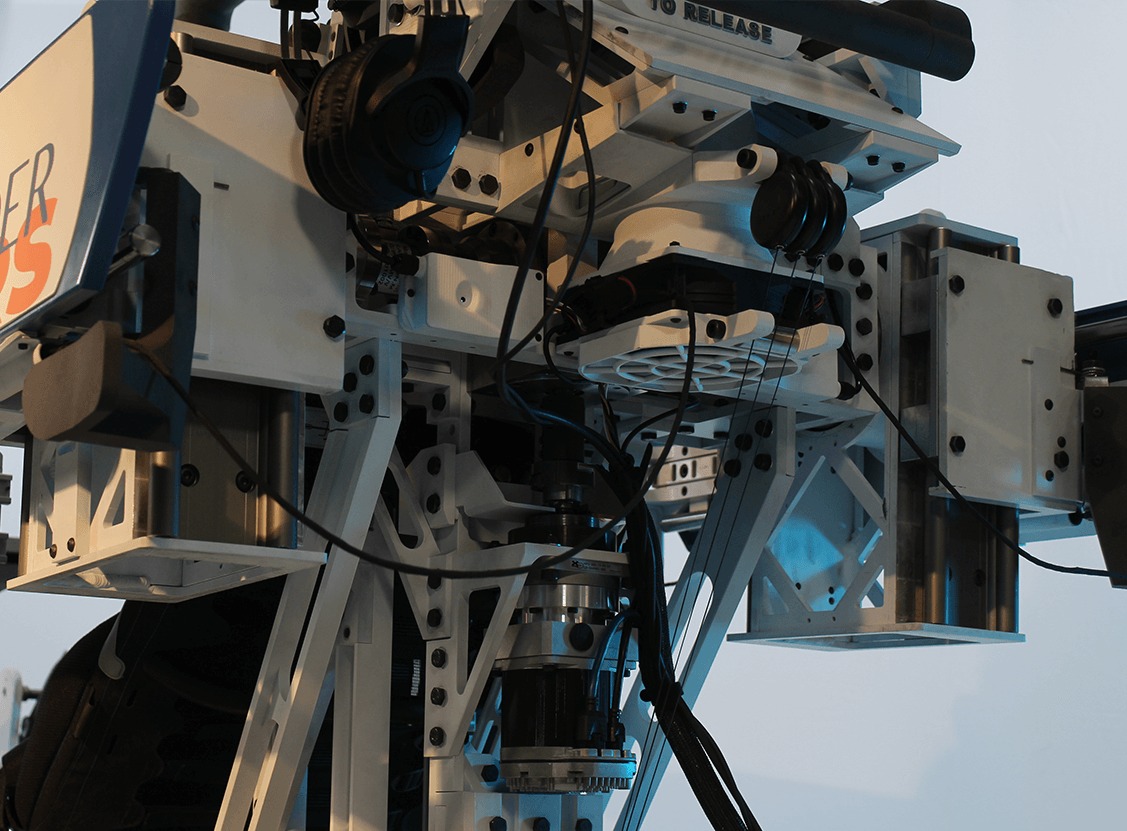
The platform simulates a hyper-realistic, deeply immersive virtual world where the rider sees, hears and feels everything. In addition, all the subtle g-forces from each turn or change in speed, the bumps and even the texture of the ground are felt through their body, the pedaling and the steering. The platform even allows riders to feel weight and inertia in an experience that is so immersive, riders feel like they are on an actual recumbent quad cycle. It is in this virtual world where the stroke survivor performs continually novel and challenging task-oriented effort which is always associated with a perception of risk. The stroke survivor is convinced of this "risk" and that exposure to simulated hazards is the element that makes every action they take to be interpreted by the brain to be urgent and important, prompting neural remapping.
Trail Systems
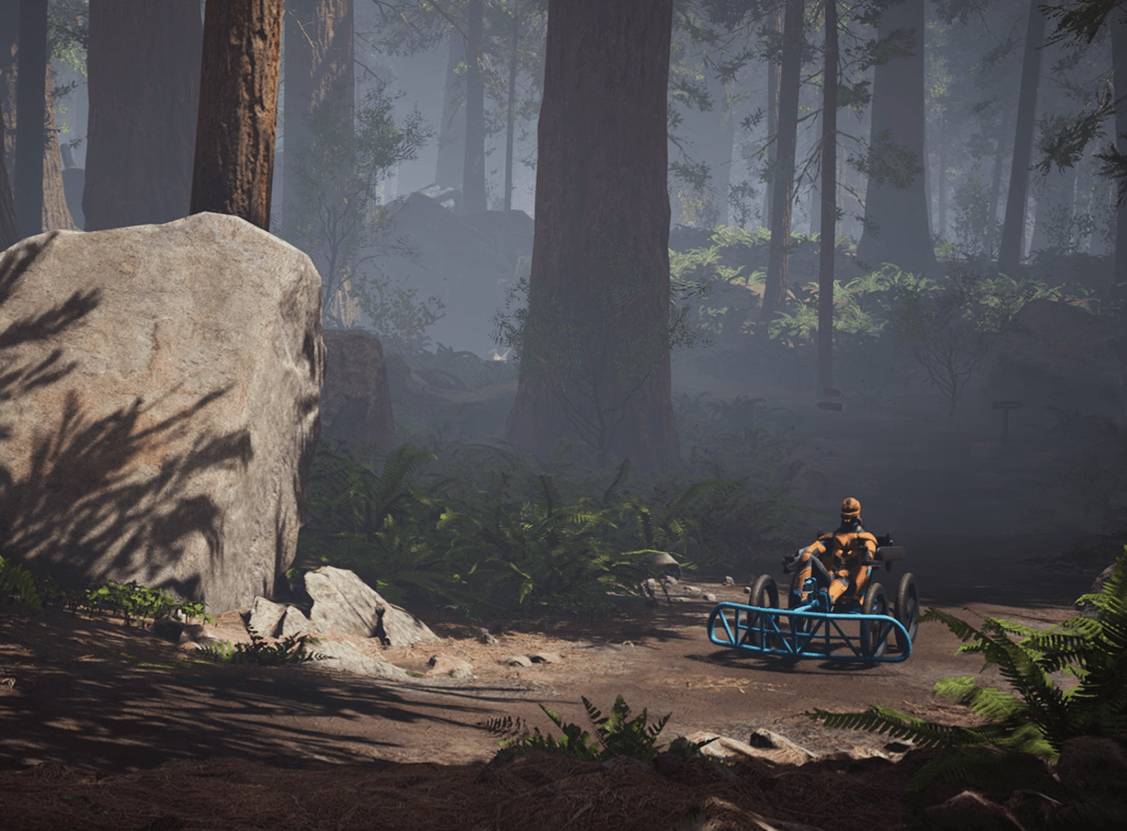
In the simulation, the stroke survivor navigates a quad cycle through a series of trail systems to reach various destinations. The platform offers eight distinct environments, each with its own set of challenges and terrains, ranging from rugged mountains to dense forests and deserts. As the rider explores, they'll encounter obstacles that require problem-solving. Each situation will need careful assessment, deciding the best route to take, how to overcome difficult terrain, or how to solve navigation puzzles. The simulation is designed to challenge cognitive functions, as each trail presents unique scenarios that require the rider to adapt and think creatively. Whether it's figuring out the best way to tackle an especially tricky path or learning how to use the map effectively, there is consistent cognitive stress for planning, decision-making, and spatial awareness.
Performance Data
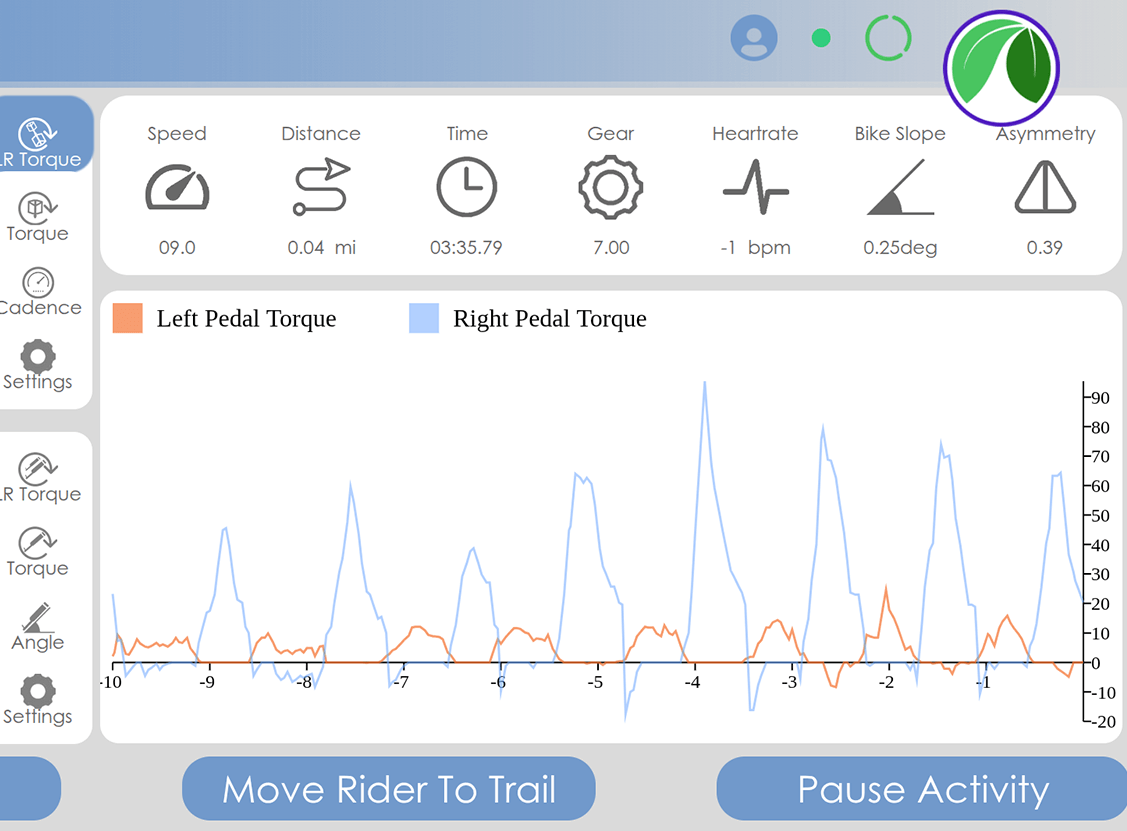
Each session displays real-time data to give the operator the best understanding of how the activity is progressing and safety monitoring. All of the robotic sensors record every aspect of applied force along with select other performance indicators. The operator can closely monitor this wide array of performance data during the session and make adjustments to the platform in real time is required. Post-session, this data is processed through cloud-based servers with an algorithm to provide comprehensive comparative analysis. These graphs are then accessible for review during progress evaluations. Unlike the current approach to neurorehabilitation, the Outbounder platform provides truly objective progression data with well over 20 million points of information recorded in an average session.